01
Market
Population and employment trends, business formation, industrial fundamentals, and whether the local tenant base is deep enough to re-lease into.
Investor Relations
We would rather you interrogate the strategy than take it on trust. This page sets out what we believe, how we underwrite, and how to begin a conversation.
In Brief
Flex Warehouse Parks acquires, improves, develops and operates small-bay industrial property — buildings divided into units of roughly 1,000 to 5,000 SF serving contractors, trades, distributors and local operating businesses.
The segment carries broad local demand, a supply side that cannot easily respond, and ownership fragmented across operators who hold a single building. We think that combination rewards a disciplined buyer who is willing to do operational work. We also think most assets in it are not worth owning, which is why the underwriting below is built to say no.
What We Believe
Not slogans. These are the assumptions we argue about internally, and the ones an investor should push on.
The tenant base is the local economy itself — thousands of independent businesses rather than one credit. Individually fragile, collectively persistent.
Where achievable rents do not support new small-format construction, existing functional stock cannot economically be reproduced.
Aggregation only creates value if it is paired with a basis worth aggregating at. Buying fragmented assets at full price produces a larger version of the same result.
More leases, more renewals, more collections. That intensity is the barrier to entry and, we believe, where the return is earned.
No amount of operating skill recovers a price that was wrong at closing. Basis before narrative.
Several assets in one market beat single assets in several. Leasing, management and maintenance carry across a cluster.
Holding well-operated assets keeps the decision to sell a choice rather than a requirement built into the underwriting.
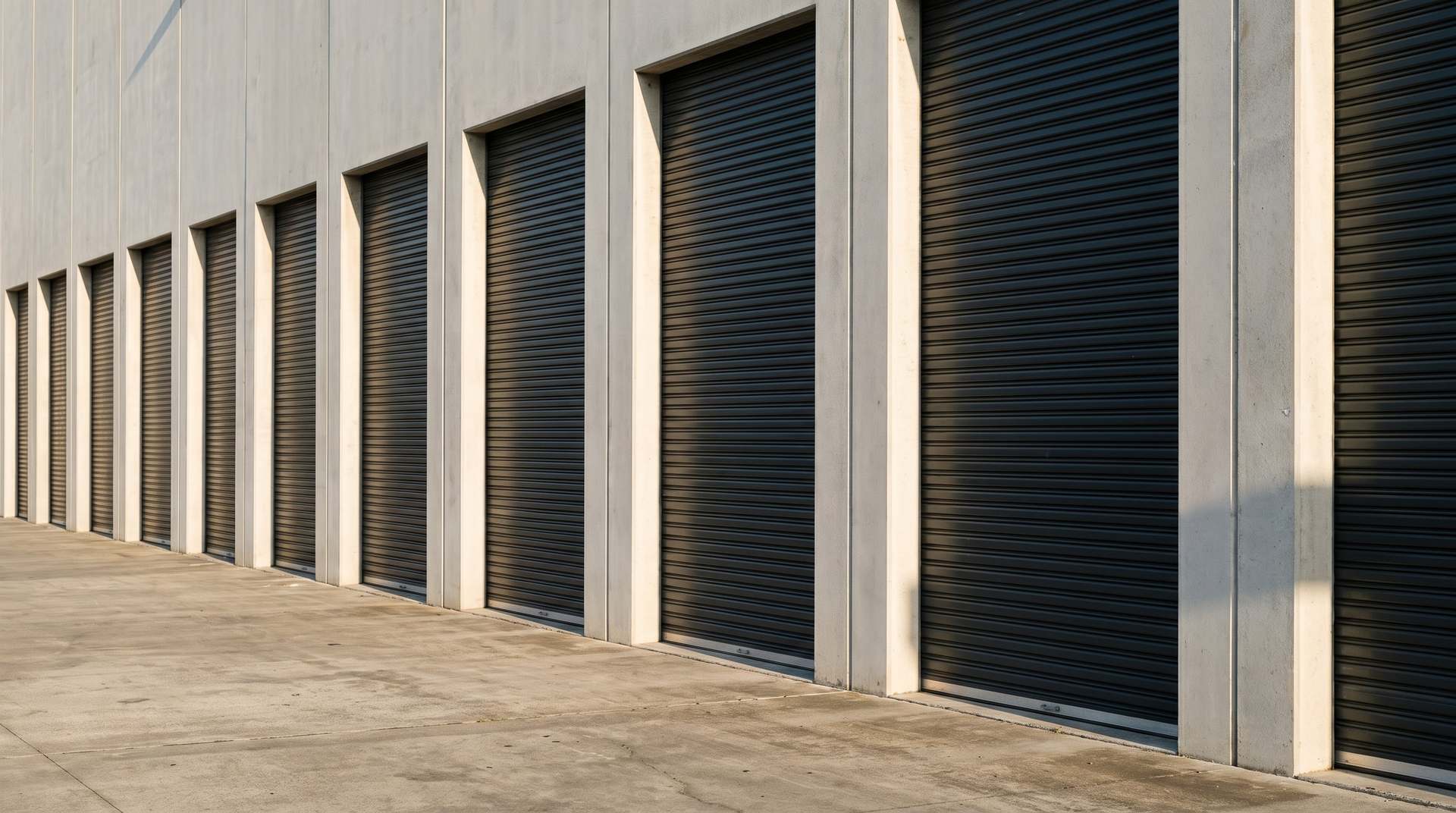
The Asset
Functional, right-sized industrial space — the thing all of this is ultimately about.
Risk-First Underwriting
An asset has to clear all four. Strong demand in a market where we cannot buy at a sensible basis is a market we study and do not enter.
01
Population and employment trends, business formation, industrial fundamentals, and whether the local tenant base is deep enough to re-lease into.
02
Access, infill characteristics, zoning and entitlement, visibility, and what competitive supply could realistically be added nearby.
03
Bay sizes and configuration, loading, parking and drive courts, clear height, power, functionality — and where the price sits against replacement cost.
04
Entry price, achievable rents, the real expense load, debt structure, and how much has to go right before the downside case stops working.
Not every small-bay property is a good investment.
A segment with favourable structural conditions still contains a great many assets we would decline. The four lenses exist to say no quickly, and to make the reasons legible when we do.
How that shows up in the model
Our published illustrative model exits at 7.50% against a 6.90% going-in yield — +60 bp wider on the way out than on the way in. It also publishes a downside case alongside the base case, and a basis range showing what the same asset returns at different entry prices.
See the illustrative modelThe Platform
Flex Warehouse Parks is the dedicated small-bay industrial platform of Northwind Investment Group, operating within its broader real estate platform.
What that relationship contributes is governance rather than volume: disciplined underwriting, investment review before capital is committed, a long-term ownership horizon, alignment between the platform and the partners who back it, and responsible capital allocation. An investor who looks into Northwind should come away more comfortable, not less.
Visit Northwind Investment GroupCommon Questions
Industrial buildings divided into smaller units — typically around 1,000 to 5,000 square feet — serving local and regional businesses. Industry research often refers to the broader category as shallow-bay or light industrial, generally describing buildings under 50,000 square feet.
Self storage holds goods. Small-bay industrial houses operating businesses. The distinction matters: tenants need power, drive-in access, clear height, a business address and the ability to run a crew and vehicles from the premises.
Predominantly local operating businesses — contractors and trades, service companies, small distributors, e-commerce operators, light manufacturers and makers. Demand is generated by local economic activity rather than a single national supply chain.
Flex Warehouse Parks is the dedicated small-bay industrial platform of Northwind Investment Group. Northwind provides platform context, underwriting discipline and capital relationships.
No. This website is informational. It does not constitute an offer to sell or a solicitation of an offer to buy any security, and it does not describe the terms of any offering. Enquiries lead to a conversation, not a transaction.
Existing small-bay and flex industrial assets, portfolios, repositioning and lease-up situations, development sites, sale-leasebacks and joint ventures. Our property profile page sets out the general criteria.
Investor Inquiries
Tell us who you are and what you would like to understand. A member of the team will come back to you directly — this begins a conversation, not a transaction.