01
Broad Tenant Demand
Contractors, trades, distributors and service businesses need functional space near the customers they serve. That demand is generated by local economic activity, not by one national tenant or supply chain.
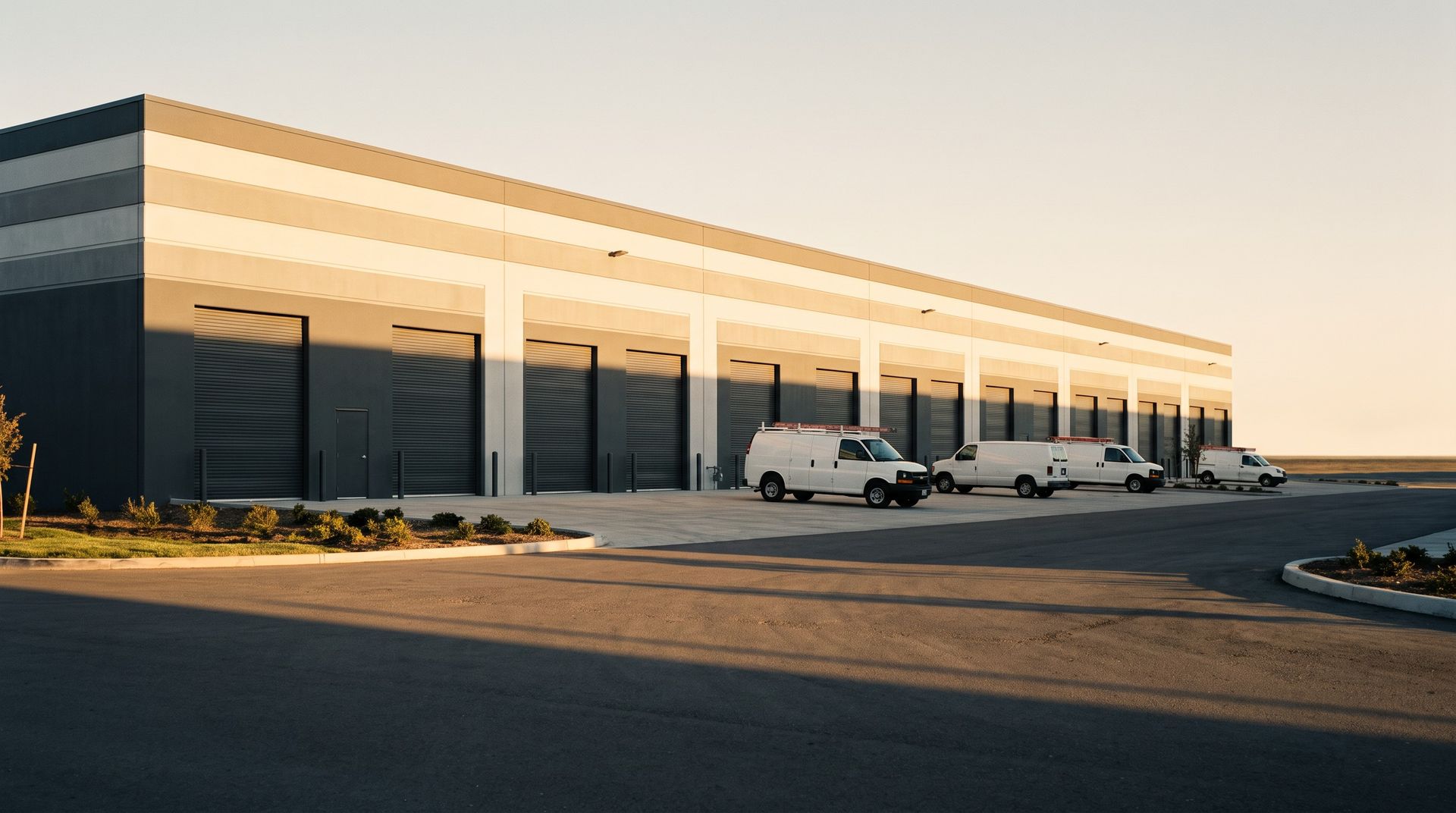
Northwind-Backed Industrial Platform
Flex Warehouse Parks acquires, improves and operates small-bay industrial property — the right-sized space that contractors, trades, distributors and local operating businesses depend on, and that almost no one is building.
The Opportunity
Institutional industrial capital followed big-box logistics — large floorplates leased to large occupiers. The businesses below need something else, and there is very little of it.
Under 500 SF
The business starts where the owner lives. Inventory in the garage, vehicles on the driveway, no separation between household and operation.
100 – 500 SF
Storage solves square footage but not operations. No power for tools, no drive-in access for a loaded vehicle, no address a business can actually run from.
1,000 – 5,000 SF per unit
Small-Bay Industrial
A right-sized unit with a roll-up door, power, clear height and a real business address. Room for vehicles, crew, inventory and a small office — at a rent a growing local business can carry.
10,000 SF + per unit
Conventional warehouse and distribution product, generally underwritten by institutional capital for larger and better-capitalised occupiers.
The gap we focus on. A business that has outgrown a garage or a storage unit, but cannot justify — or find — a conventional industrial building, has limited options. That constraint is the tenant's problem. It is also, in our view, the investor's opportunity.
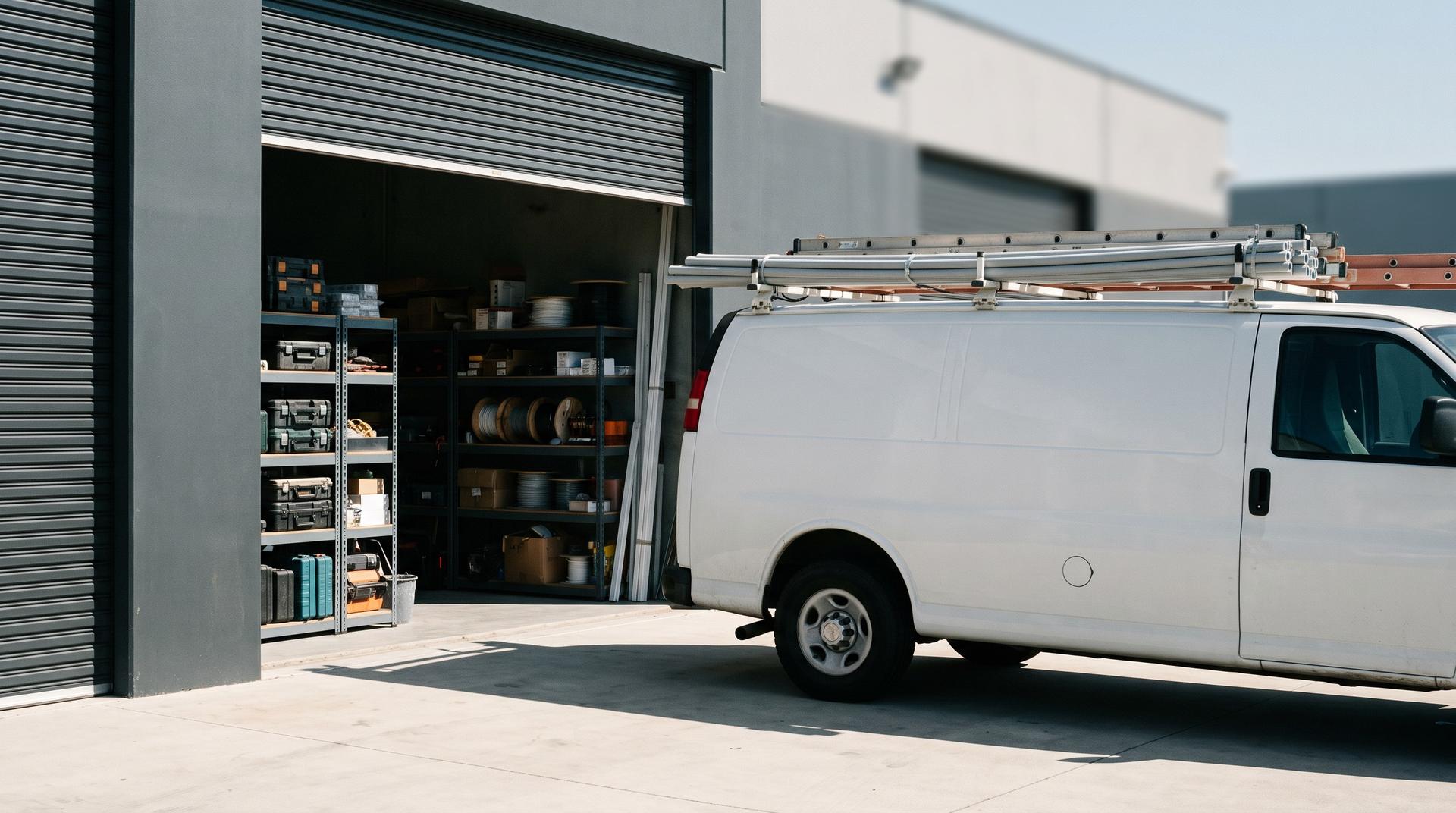
The Tenant
A trades business operating from a right-sized unit — vehicles, inventory and crew under one roof.
Market Evidence
Third-party research, each figure attributed to its publisher. More on Why Small-Bay Industrial.
4.8%
Vacancy for industrial properties under 150,000 SF
Vacancy in assets over 150,000 SF is nearly double that rate.
Corebridge Financial, June 2025
0.5%
Small-bay under construction as a share of existing stock
Roughly 90 million SF of small-bay industrial under construction nationwide.
Corebridge Financial, June 2025
80%
Of shallow-bay inventory built before 2000
Nearly half was built prior to 1980. Properties built since 2010 account for only 5% of total inventory.
CBRE, March 2026
62%
Of 2024 industrial transaction volume was under 150,000 SF
Institutional buyers accounted for 20% of that light industrial volume, up from 16% in 2023.
Corebridge Financial, June 2025
Why It Exists
These are themes we underwrite against — not guaranteed outcomes. Each is tested asset by asset.
01
Contractors, trades, distributors and service businesses need functional space near the customers they serve. That demand is generated by local economic activity, not by one national tenant or supply chain.
02
Small-format space is expensive to build relative to the rent it commands. Subdividing multiplies demising walls, doors, power and life-safety costs across less leasable area, so the stock is largely inherited rather than replaced.
03
Much of the stock sits with local operators, founding families and individual investors, often a single building held for decades. Fragmentation is what makes disciplined aggregation possible.
04
Leasing, management, capital work, unit mix and tenant experience are levers an operator controls directly. We believe returns here are earned through operations, not assumed through cap-rate compression.
How We Create Value
Value creation here is operational. Nothing in this model requires the market to re-rate the asset upward.
Buy well-located assets at a basis that does not require everything to go right.
Physical condition, unit mix, life-safety, lighting, drive courts and presentation.
Professional, priced, marketed leasing to local businesses in right-sized units.
Centralised management, maintenance standards and responsive tenant service.
Enquiry and leasing data tells us which markets, unit sizes and business types are asking — and what they will pay.
Add assets where we already operate, so management and leasing carry across a group.
Extend a proven property-level model into markets the data supports.
Each cycle informs the next acquisition. The loop is the strategy — not any single building.
The Learn stage describes an operating architecture we are building, not a proprietary data advantage we claim to already hold.
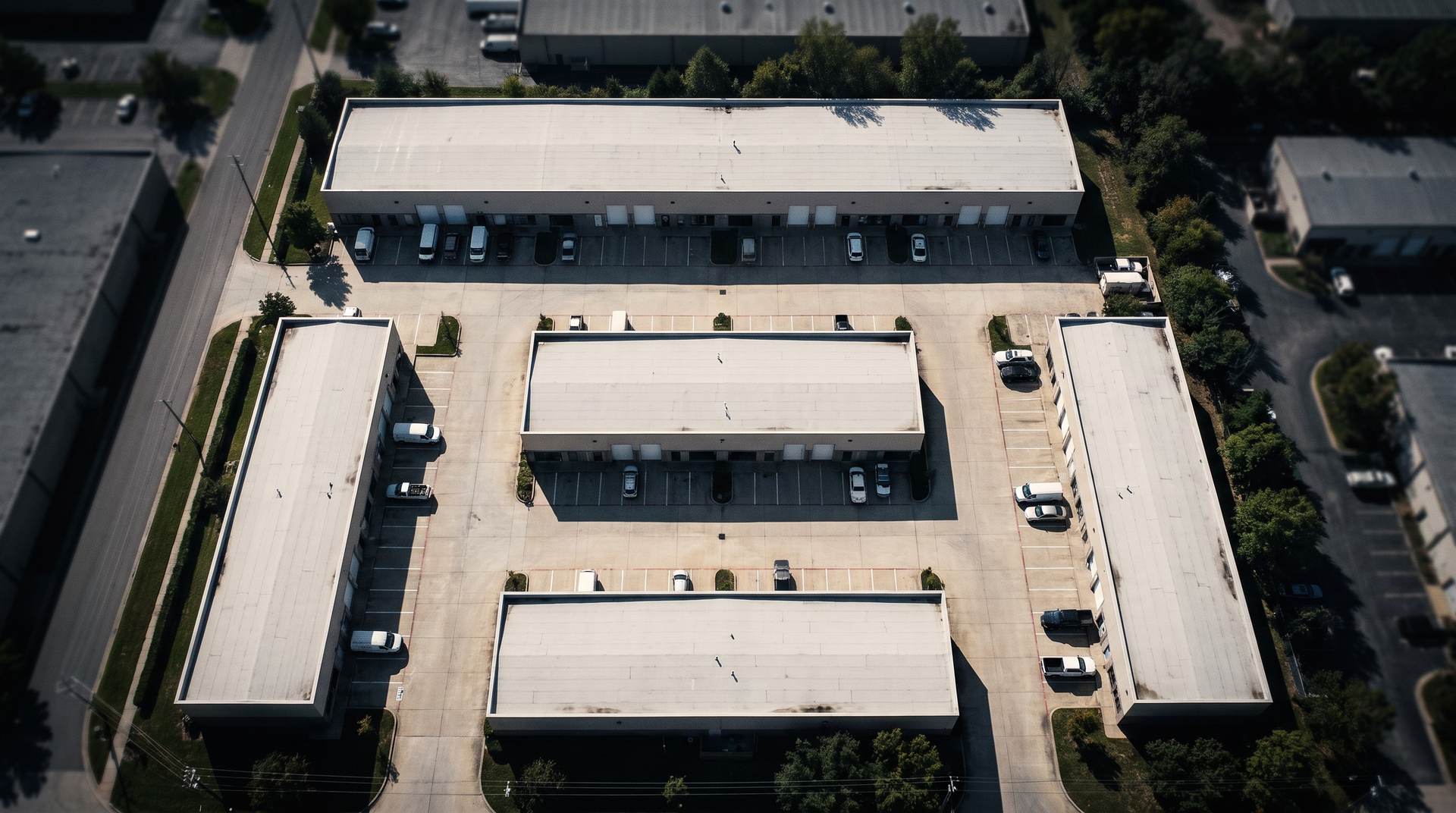
Density
Clusters rather than isolated buildings — where leasing, management and maintenance start to carry across assets.
Underwriting Discipline
Favourable segment conditions do not underwrite an asset. Basis, execution and operations do.
01
Population and employment trends, business formation, industrial fundamentals, and whether the local tenant base is deep enough to re-lease into.
02
Access, infill characteristics, zoning and entitlement, visibility, and what competitive supply could realistically be added nearby.
03
Bay sizes and configuration, loading, parking and drive courts, clear height, power, functionality — and where the price sits against replacement cost.
04
Entry price, achievable rents, the real expense load, debt structure, and how much has to go right before the downside case stops working.
Not every small-bay property is a good investment.
A segment with favourable structural conditions still contains a great many assets we would decline. The four lenses exist to say no quickly, and to make the reasons legible when we do.
The Platform
Flex Warehouse Parks is the dedicated small-bay industrial platform of Northwind Investment Group, operating within its broader real estate platform.
What that contributes is governance rather than volume: disciplined underwriting, investment review before capital is committed, a long-term ownership horizon, and alignment between the platform and the partners who back it. We would rather own a smaller number of well-bought assets and operate them properly than accumulate square footage.
Visit Northwind Investment GroupInvestors & Capital Partners
We are glad to walk through how we underwrite this segment, which assumptions we argue about most, and where we think it can disappoint.